

The Hidden Crisis Beneath Our Cities
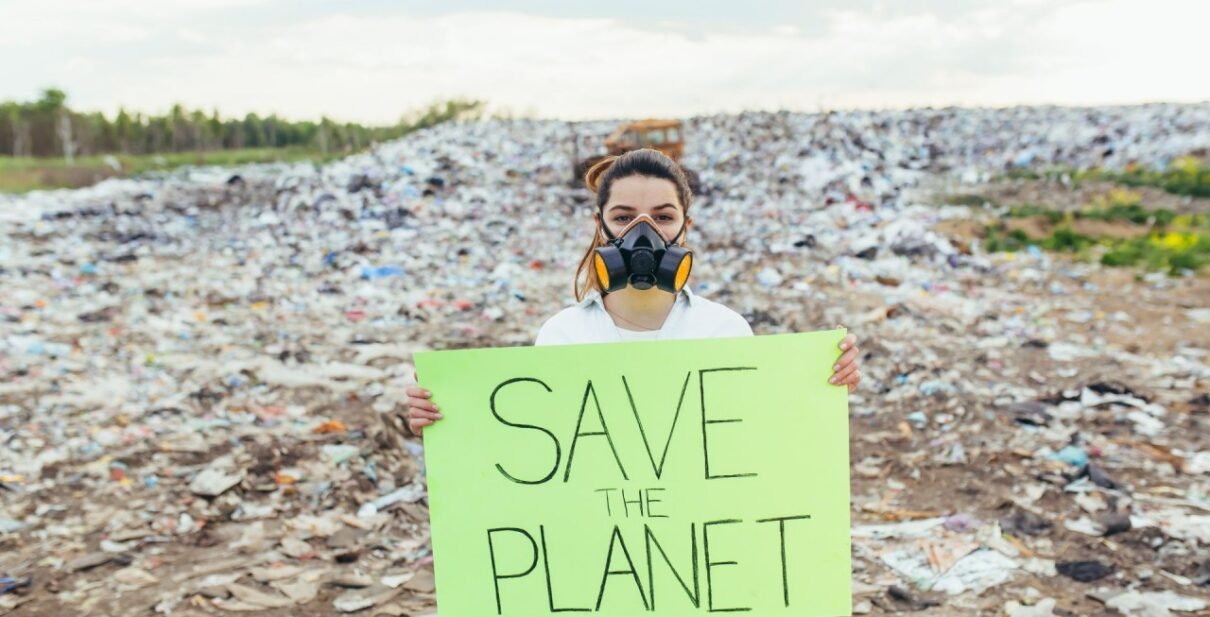
Most Indians see waste collection trucks and assume the problem is solved—garbage disappears, life continues. But waste doesn’t disappear. It accumulates in massive landfills on city outskirts, growing taller and wider each year, creating environmental disasters that affect millions.
Delhi’s Ghazipur landfill towers over 65 meters—taller than the Qutub Minar’s viewing platform. It grows 10 meters annually. In 2017, a section collapsed, killing two people and burying vehicles. Methane fires erupt regularly, visible from kilometers away.
Mumbai’s Deonar landfill occupies 326 acres of prime metropolitan land worth thousands of crores. It catches fire almost annually, most recently in 2024, blanketing neighborhoods in toxic smoke for weeks. Residents suffer respiratory diseases at rates 40% higher than city averages.
Bangalore’s Mandur landfill sparked years of protests, litigation, and political deadlock. Surrounding villages block garbage trucks nightly, forcing the city into crisis mode.
This isn’t just an aesthetic problem. It’s a public health emergency, an environmental disaster, and a massive economic drain. And it’s getting worse.
The True Cost of Landfills
1. Land Consumption in Land-Starved Cities
India’s urban areas face severe land scarcity. Real estate prices in major cities rank among the world’s highest. Yet we dedicate thousands of acres to waste disposal.
The Numbers:
- Mumbai’s Deonar: 326 acres
- Delhi’s Ghazipur: 70+ acres
- Bangalore’s Mandur: 150 acres
- Chennai’s Perungudi: 200 acres
At Mumbai land values (₹50-100 crore/acre), Deonar represents ₹16,000-32,000 crore in lost economic opportunity. That land could generate property tax, employment, housing, parks, or commercial development. Instead, it imposes only costs.
As cities expand, land scarcity intensifies. Every acre consumed by landfills is an acre unavailable for schools, hospitals, affordable housing, or green spaces.
2. Groundwater Contamination
Leachate—toxic liquid formed when rain percolates through waste—is a chemical cocktail:
- Heavy metals (lead, mercury, cadmium from electronics and batteries)
- Organic pollutants (benzene, toluene from plastics and solvents)
- Pathogens (bacteria, viruses from human waste)
- High BOD/COD (biological and chemical oxygen demand)
Even “sanitary” landfills with liners eventually leak. EPA studies show all liners fail within 30-50 years due to tears, degradation, and seepage through joints. In India, most landfills lack even basic liners.
Leachate seeps into aquifers, contaminating drinking water sources for surrounding communities. Once contaminated, aquifer cleanup is nearly impossible and takes decades.
Real Impact: Villages near Delhi’s Bhalswa report black, foul-smelling groundwater unfit for drinking or irrigation. Chennai’s Perungudi leachate has contaminated the Pallikaranai wetland, threatening one of India’s few remaining urban ecosystems.
3. Methane Emissions and Climate Impact
Organic waste decomposing anaerobically (without oxygen) in landfills produces methane—a greenhouse gas 25 times more potent than CO₂ over 100 years.
India’s Contribution:
- Landfills contribute approximately 17 million tons of CO₂-equivalent annually
- This undermines India’s Paris Agreement commitments
- Represents 8-10% of total methane emissions
Unlike CO₂ which persists for centuries, methane’s atmospheric lifetime is only 12-15 years. This means reducing methane emissions provides immediate climate benefits—critical for meeting 2030 targets.
4. Air Pollution from Spontaneous Fires
Landfill fires are common, especially during dry seasons. Methane combusts spontaneously; discarded materials smolder for weeks or months. The smoke contains:
- Particulate Matter (PM2.5, PM10): Penetrates deep into lungs, causing asthma, COPD, cancer
- Carbon Monoxide: Reduces oxygen delivery, dangerous for cardiac patients
- Volatile Organic Compounds (VOCs): Eye irritation, headaches, nausea
- Dioxins and Furans: Carcinogens, hormonal disruptors
Health Data: Residents near Bhalswa, Delhi, report respiratory diseases and eye irritation from chronic smoke exposure. Hospital admissions spike during fire events. Children and elderly suffer most.
Mumbai’s Deonar fire in January 2016 lasted 10 days, affecting 10 lakh residents. Air quality monitoring showed PM2.5 levels exceeding 500 µg/m³ (WHO safe limit: 25 µg/m³).
5. Disease Vectors and Public Health
Landfills create ideal breeding grounds for disease carriers:
Mosquitoes: Stagnant leachate pools breed Aedes (dengue, chikungunya, Zika) and Anopheles (malaria). Public health data correlates landfill proximity with elevated disease incidence.
Rodents: Rats and mice feed on organic waste, carrying leptospirosis, plague, and hantavirus. They migrate into nearby neighborhoods, spreading disease.
Flies: House flies and blow flies breed in decomposing waste, spreading gastrointestinal diseases (diarrhea, dysentery, cholera, typhoid).
Statistics:
- Malaria incidence 2-3x higher within 2 km of landfills
- Dengue cases 50-80% elevated during monsoon
- Diarrheal diseases 40% more frequent in adjacent neighborhoods
6. Economic Losses and Opportunity Costs
Beyond health and environmental costs, landfills impose direct economic burdens:
- Infrastructure: Expanding landfills, access roads, leachate treatment
- Environmental remediation: Cleanup attempts, legal battles
- Health expenditure: Treating diseases linked to landfill exposure
- Lost productivity: Illness, reduced property values
- Foregone development: Land that could generate tax revenue sits idle
The World Bank estimates India loses ₹60,000-80,000 crore annually from inadequate waste management—through health costs, environmental damage, and lost resource value.
Why Traditional Approaches Fail
“Sanitary” Landfills Aren’t Actually Sanitary
Engineered landfills with clay/plastic liners and leachate collection sound good in theory. In practice:
- Liners tear during installation or from settlement
- Collection pipes clog with sediment and biological growth
- Monitoring equipment fails or isn’t maintained
- Long-term management (30-50 years post-closure) is rarely enforced
The EPA’s blunt conclusion: “All landfills will eventually leak.”
Recycling Alone Can’t Solve the Problem
While critical for paper, cardboard, metals, and clean plastics, recycling handles only 30-35% of waste streams. The remaining 65-70%—contaminated organics, mixed materials, soiled paper, multi-layer packaging—still requires disposal.
Moreover, India’s recycling infrastructure faces challenges:
- Informal sector handles most recycling without safety standards
- Contamination reduces recyclable quality
- Market volatility affects economic viability
- Collection coverage remains incomplete
We cannot recycle our way out of this crisis. Complementary solutions are essential.
Open Burning: Desperation, Not Solution
In areas without collection services, or where landfills are full, communities resort to open burning. This is the worst possible option:
- Produces maximum toxic emissions (dioxins, furans, heavy metals)
- Zero energy recovery
- Immediate health impacts on surrounding population
- Illegal but widespread due to lack of alternatives
The Gasification Solution: Dramatic Landfill Reduction
Gasification offers what landfills cannot: volume reduction, energy recovery, and resource circulation.
Volume Reduction: 85-94%
A 200 TPD gasification plant processing 73,000 tons annually reduces landfill deposits to just 4,380-10,950 tons of inert slag—that’s the difference between needing 15-20 acres of landfill space annually versus 1-2 acres.
20-Year Comparison:
- Landfilling: 300-400 acres required (growing)
- Gasification: 20-40 acres for inert residue
- Land Saved: 260-360 acres per plant
For cities deploying 10-20 plants: 2,600-7,200 acres reclaimed—enough for 50+ new parks, 100+ schools, or housing for 500,000 people.
Closed-Loop Processing
Unlike landfills that simply contain waste (poorly), gasification transforms it:
- Organics → Syngas → Electricity/Pyro-oil: Energy recovery
- Metals → Extracted → Recycled: Resource conservation
- Plastics → Pyro-oil → Industrial fuel: Chemical recycling
- Inerts → Slag → Construction material: Beneficial use
Only truly inert, non-hazardous residues require disposal.
Immediate Methane Elimination
By diverting organic waste from anaerobic decomposition, gasification prevents methane formation entirely. The climate impact is immediate and measurable.
Per 200 TPD Plant:
- Avoided methane: 15,000-25,000 tons CO₂-eq/year
- 20-year benefit: 300,000-500,000 tons CO₂-eq
- Carbon credit revenue: ₹3-6 crore annually
Multiply by India’s potential plant deployment (100-200 facilities to handle current waste) and national climate benefits become substantial.
Community Health Benefits
Enclosed gasification facilities with advanced emission controls eliminate:
- Disease vector breeding (no exposed waste, no leachate)
- Spontaneous fires and smoke (controlled process)
- Odors (enclosed handling)
- Groundwater contamination (zero leachate generation)
Properly operated plants can coexist with urban areas without health consequences. Many global examples operate successfully in dense cities—Tokyo, Singapore, Copenhagen.
Legacy Landfill Reclamation: Cleaning Up the Past
India isn’t just facing future waste—we’re burdened with decades of accumulated legacy waste. Gasification enables reclamation:
The Process:
1. Site Assessment:
- Topographic surveying and volume estimation
- Waste composition analysis through test trenches
- Contamination mapping (leachate, methane, heavy metals)
- Structural stability evaluation
2. Excavation:
- Mechanical excavation with proper safety protocols
- Segregation during removal: combustibles, inerts, recyclables
- Methane monitoring and ventilation
- Dust and odor control measures
3. Processing:
- Fresh segregation recovers metals (40-60% of legacy waste remains combustible even after years)
- Gasification handles partially decomposed organics
- Inerts sorted for construction use or disposal
4. Land Restoration:
- Soil remediation and treatment
- Groundwater monitoring and cleanup if needed
- Site certification for safe reuse
- Redevelopment planning (parks, commercial, residential)
Success Stories:
Tokyo: Reclaimed multiple landfills now serving as parks, sports facilities, and residential areas.
Singapore: Limited land forced aggressive reclamation. Pulau Semakau, once a landfill, is now an eco-park with marine biodiversity.
Germany: Hundreds of legacy sites remediated through excavation, sorting, and thermal treatment. Land returned to productive use.
India’s Opportunity: We have thousands of acres of legacy landfills. Reclamation could restore valuable urban land while eliminating pollution sources.
Policy and Implementation Pathways
Regulatory Mandates
State governments should establish landfill diversion targets:
- 5-year goal: 50% reduction in landfill disposal
- 10-year goal: 80% reduction
- 15-year goal: Zero landfill except inert residues
Mandatory targets create market certainty for waste-to-energy investments.
Differential Tipping Fees
Economic incentives drive behavior. Municipalities should charge:
- Landfill disposal: ₹2,500-3,500/ton (high cost reflecting true environmental impact)
- Gasification processing: ₹1,500-2,000/ton (lower cost encouraging diversion)
- Recycling facilities: ₹500-1,000/ton (lowest cost for best option)
This price structure naturally directs waste to most sustainable processing.
PPP Frameworks
Public-Private Partnerships distribute risks:
Municipality provides:
- Land (typically 10-15 acres)
- Waste supply guarantee (minimum tonnage)
- Power Purchase Agreement (for electricity offtake)
- Regulatory clearances support
Private operator provides:
- Capital investment (₹320-380 crore per plant)
- Technology and equipment
- Operations and maintenance
- Environmental compliance
Revenue sharing:
- Tipping fees go to operator
- Power sales split between municipality and operator
- By-product revenues (pyro-oil, biochar, metals) to operator
- Carbon credits shared
Well-structured PPPs have succeeded globally in waste management. India’s existing PPP frameworks can adapt to waste-to-energy.
Community Engagement
Projects succeed when communities support them. Essential elements:
- Early consultation: Engage residents, waste picker communities, and NGOs before finalizing plans
- Transparency: Public access to emission data, third-party audits, site visits
- Employment priority: Hire local residents, integrate informal waste workers
- Benefit sharing: Community development funds, local infrastructure improvements
- Grievance mechanisms: Rapid response to concerns, regular stakeholder meetings
Opposition typically stems from fear of unknown technology. Education and transparency build trust.
The Hyderabad Example: What’s Possible
Our home city illustrates the opportunity:
Current Situation:
- Municipal waste generation: 4,500 TPD
- Existing landfills: Jawaharnagar, Fathullaguda (both controversial and contested)
- Growing pollution and public health concerns
Gasification Solution:
- Deploy 20-25 plants of 200 TPD each
- Process 100% of municipal waste
- Eliminate future landfill expansion
Benefits:
- Energy: 400-500 GWh electricity annually (power for 200,000 homes)
- Land: Save 400-500 acres from landfill use
- Jobs: 800-1,000 green jobs in operations
- Climate: Reduce GHG emissions by 300,000+ tons CO₂-eq/year
- Health: Eliminate disease vectors and pollution from landfills
Investment:
- Capital: ₹7,000-9,000 crore over 5-7 years
- Comparable to current landfill infrastructure costs over 20 years
- Added benefit: Energy revenues offset operating costs
Feasibility:
- Available PPP frameworks
- Strong industrial base for by-product offtake (pyro-oil, biochar)
- KANKYO-Vaigunth local implementation capability
- Policy support from Telangana government’s sustainability initiatives
This model scales to any major Indian city facing similar challenges.
Conclusion: No More Mountains of Waste
Urban sustainability demands we stop treating waste as something to hide and start seeing it as a resource. Landfills represent failure—failure of systems, policy, and imagination.
Gasification represents possibility—energy, jobs, clean air, recovered land, and a circular economy.
The choice is clear. India’s cities can continue expanding toxic, expensive, land-consuming landfills that endanger public health and waste resources. Or we can invest in proven technology that transforms waste into wealth while meeting the strictest environmental standards.
At Zerosigma Shakti, backed by KANKYO Group’s global expertise and Vaigunth Ener Tek’s local implementation excellence, we’re committed to the latter.
Because sustainable cities don’t bury their problems. They solve them.


