

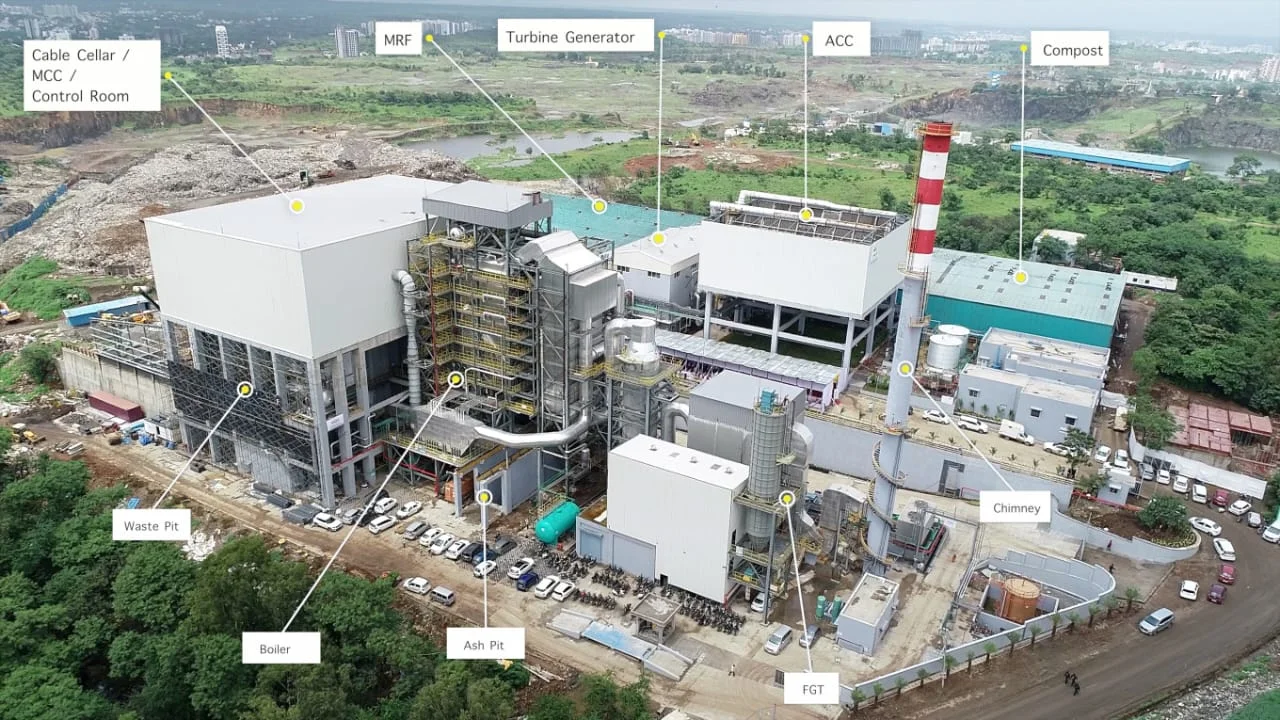
Turn Your Industrial Waste from Liability to Asset
Manufacturing facilities, chemical plants, textile mills, pharmaceutical companies, and food processors generate thousands of tons of industrial waste annually—paying expensive tipping fees for disposal while simultaneously purchasing grid electricity at premium rates.
Our industrial waste-to-energy solutions break this cycle. We design, build, and operate customized gasification systems that convert your specific waste streams into electricity, process heat, and valuable byproducts—reducing disposal costs while improving energy independence and sustainability credentials.
Industrial Waste Challenges
The Hidden Costs of Traditional Disposal
Financial Burden:
- Tipping fees: ₹2,500-4,000/ton for industrial waste
- Transportation costs
- Regulatory compliance expenses
- Liability for improper disposal
Operational Risks:
- Dependency on external disposal facilities
- Landfill capacity constraints
- Regulatory violations and fines
- Reputational damage from environmental incidents
Missed Opportunities:
- Energy content in waste goes unrecovered
- Valuable materials lost to landfills
- Carbon footprint from waste transport and disposal
- No contribution to sustainability goals
Our Solution: Customized Gasification Systems
Adaptable Technology for Diverse Waste Streams
Unlike one-size-fits-all approaches, we customize systems for your specific waste:
Chemical Industry:
- Organic solvents and residues
- Contaminated packaging
- Filter cakes and sludges
- Off-spec products
Textile Industry:
- Fabric scraps and cuttings
- Dyeing residues
- Packaging materials
- Defective products
Pharmaceutical Industry:
- API manufacturing waste
- Contaminated materials
- Expired products
- Packaging and containers
Food Processing:
- Organic waste (peels, rinds, pulp)
- Packaging materials
- Off-spec and expired products
- Wastewater treatment sludge
Electronics Manufacturing:
- Plastic components and housings
- Packaging materials
- Production scrap
- Contaminated PPE and consumables
System Design & Features
Capacity Options
Small-Scale (10-25 TPD):
- Single facility or small manufacturing cluster
- 500-1,000 kW power generation
- Modular design for easy installation
- Investment: ₹15-25 Crore
Medium-Scale (50-100 TPD):
- Large facility or industrial park
- 2-4 MW power generation
- Integrated with existing infrastructure
- Investment: ₹80-120 Crore
Large-Scale (100-200 TPD):
- Major manufacturing complex or SEZ
- 4-8 MW power generation
- Multiple waste streams integration
- Investment: ₹150-250 Crore
Pre-Processing Customization
Characterization Study:
- Waste composition analysis
- Moisture and calorific value testing
- Contaminant identification
- Seasonal variation assessment
Custom Pre-Treatment:
- High-moisture waste: Enhanced drying systems
- Variable composition: Blending and buffering storage
- Hazardous components: Segregation and special handling
- Large objects: Size reduction and shredding
- Chemical residues: Neutralization pre-treatment
Energy Output Options
Electricity Generation:
- Grid-tied or islanded operation
- Power quality compliant with CEA standards
- Net metering where applicable
- Battery storage for load balancing
Process Heat/Steam:
- Direct heat integration with manufacturing
- Steam generation (various pressure ratings)
- Hot water for cleaning/processing
- HVAC heating applications
Combined Heat & Power (CHP):
- Maximizes energy efficiency (75-85% vs. 30-40% electricity-only)
- Reduces overall energy costs by 40-60%
- Year-round utilization value
Alternative Fuels:
- Pyro-oil for boilers and furnaces
- Syngas for industrial burners
- Hydrogen for specialized processes
Benefits for Industrial Facilities
Economic Returns
Cost Savings:
- Eliminate tipping fees: ₹2,500-4,000/ton saved
- Reduce grid electricity: ₹6-9/kWh avoided
- Lower thermal energy costs
- Minimize waste transportation
Revenue Generation:
- Excess power sales to grid
- Renewable Energy Certificates (RECs)
- Carbon credits from fossil displacement
- Recovered materials (metals, slag)
Typical Payback: 5-8 years (faster than municipal projects due to higher energy value capture)
Operational Benefits
Energy Security:
- Reduced dependency on grid (power quality issues, outages)
- Stable, predictable energy costs
- Protection from tariff increases
- Captive power generation
Waste Management:
- Zero-landfill operations
- Consistent disposal capacity
- No external vendor dependencies
- Regulatory compliance assurance
Process Integration:
- Waste heat utilization in manufacturing
- Steam generation for processes
- Hot water for cleaning operations
- Cooling through absorption chillers
Sustainability & ESG
Environmental Credentials:
- Carbon footprint reduction (40-60%)
- Circular economy demonstration
- Renewable energy self-generation
- Zero-landfill certification
Corporate Reporting:
- ESG score improvement
- Sustainability report metrics
- Green building certifications (LEED, GRIHA)
- Supply chain sustainability requirements
Market Advantage:
- Customer preference for sustainable suppliers
- Access to green financing
- Brand differentiation
- Regulatory compliance leadership
Technical Specifications
System Components
Waste Reception & Storage:
- Enclosed receiving area with negative pressure
- 3-5 days buffer storage capacity
- Segregation space for non-processable items
- Hazardous material handling procedures
Pre-Processing Line:
- Size reduction: Industrial shredders (30-40 TPH)
- Moisture control: Thermal dryers or sun drying yards
- Metal separation: Magnetic and eddy current systems
- Quality control: Automated composition monitoring
Gasification Unit:
- KANKYO reactor scaled to capacity
- Temperature: 800-1,200°C (standard) or plasma-enhanced
- Residence time: 2-4 hours
- Continuous operation with online maintenance capability
Energy Conversion:
- Gas engines or turbines for electricity
- Heat recovery steam generators (HRSG)
- Absorption chillers for cooling (optional)
- Pyro-oil condensation units (optional)
Emission Control:
- Multi-stage scrubbing (wet + dry)
- Electrostatic precipitators
- Activated carbon polishing
- CEMS (Continuous Emission Monitoring System)
- Stack height per regulatory requirements
Control & Monitoring:
- DCS (Distributed Control System)
- SCADA for remote monitoring
- Automated process optimization
- Predictive maintenance algorithms
- Data logging for compliance reporting
Implementation Process
Phase 1: Feasibility Study (8-12 weeks)
Waste Characterization:
- 4-6 weeks of waste sampling
- Composition, moisture, calorific value analysis
- Seasonal and production-linked variations
- Contaminant and hazard identification
Site Assessment:
- Available space evaluation
- Utility connections (electricity, water, gas)
- Environmental considerations
- Logistics and material flow
Energy Analysis:
- Current energy consumption patterns
- Peak and base load identification
- Thermal energy requirements
- Grid interconnection feasibility
Financial Modeling:
- Capital and operating cost projections
- Energy savings and revenue calculations
- Incentives and financing options
- Payback and IRR analysis
Regulatory Review:
- Environmental clearance requirements
- State PCB consultation
- Consent to Establish process
- Grid connection approvals
Deliverable: Comprehensive feasibility report with go/no-go recommendation
Phase 2: Engineering & Design (4-6 months)
Detailed Engineering:
- Process flow diagrams
- Equipment specifications
- Piping & instrumentation diagrams (P&IDs)
- Civil, structural, electrical designs
Equipment Procurement:
- KANKYO reactor and core equipment
- Balance of plant from qualified vendors
- Long-lead items ordered early
- Quality assurance protocols
Regulatory Approvals:
- Environmental Impact Assessment (if required)
- Consent to Establish from SPCB
- Building and fire safety permits
- Grid interconnection agreement
Phase 3: Construction (8-14 months)
Site Preparation:
- Civil works: foundations, platforms, buildings
- Utility installations: power, water, drainage
- Road and truck access
- Landscaping and fencing
Equipment Installation:
- Reactor and processing equipment
- Electrical and instrumentation
- Emission control systems
- Piping and structural supports
Integration:
- Connection to existing facility utilities
- Steam/hot water distribution lines
- Electrical switchgear and transformers
- Control room and monitoring systems
Phase 4: Commissioning (3-4 months)
Cold Commissioning:
- Mechanical completion checks
- Electrical and instrumentation testing
- Leak testing and pressure tests
- Control system validation
Hot Commissioning:
- Startup with natural gas or LPG
- Temperature and pressure profiling
- Emission system verification
- Performance baseline establishment
Trial Operations:
- Gradual waste feed introduction
- Process parameter optimization
- Operator training (hands-on)
- 30-day performance guarantee test
Regulatory Inspections:
- SPCB stack testing and certification
- Consent to Operate issuance
- Grid synchronization approval
- Fire and safety clearances
Handover:
- Operations and maintenance manuals
- Spare parts inventory
- Training completion certificates
- Warranty activation
Financial Model – Sample 50 TPD Industrial Facility
Capital Investment (CAPEX)
| Component | Cost (₹ Crore) |
|---|---|
| Pre-Processing Equipment | 8-12 |
| Gasification Reactor | 25-35 |
| Emission Control Systems | 15-20 |
| Power Generation (2 MW) | 12-18 |
| Civil Works & Buildings | 8-12 |
| Utilities & Integration | 6-10 |
| Contingency & Engineering | 6-10 |
| Total CAPEX | 80-120 |
Operating Expenses (OPEX – Annual)
| Category | Cost (₹ Crore/Year) |
|---|---|
| Personnel (20-25 staff) | 3-4 |
| Consumables & Reagents | 2-3 |
| Maintenance & Repairs | 2-3 |
| Utilities (net after generation) | 1-2 |
| Insurance & Administration | 1-2 |
| Compliance & Testing | 1-1.5 |
| Total OPEX | 10-15 |
Annual Savings & Revenue
| Source | Amount (₹ Crore/Year) |
|---|---|
| Avoided Disposal Costs (18,250 tons × ₹3,000/ton) | 5.5 |
| Electricity Savings (12-15 GWh × ₹7/kWh) | 8-10 |
| Thermal Energy Savings | 3-5 |
| Recovered Materials | 0.5-1 |
| Carbon Credits | 1-2 |
| Total Benefits | 18-23.5 |
Financial Returns
- Net Annual Benefit: ₹8-13.5 Crore (Benefits minus OPEX)
- Simple Payback: 6-9 years
- Internal Rate of Return: 15-22%
- Net Present Value (10% discount): ₹20-40 Crore over 15 years
Note: Assumes facility operates at 85% capacity factor and energy prices remain stable. Actual results vary by location, waste characteristics, and energy costs.
Industries We Serve
✅ Chemical & Petrochemical
- Organic waste and solvents
- Contaminated packaging
- Filter cakes and sludges
- Off-specification products
✅ Textile & Apparel
- Fabric scraps and cuttings
- Dyeing and finishing waste
- Packaging materials
- Defective finished goods
✅ Pharmaceutical & API Manufacturing
- Manufacturing residues
- Contaminated materials
- Expired products
- Packaging and containers
✅ Food & Beverage Processing
- Organic processing waste
- Packaging materials
- Off-spec and expired products
- Wastewater treatment sludge
✅ Electronics & Electrical
- Plastic components
- Packaging materials
- Production scrap
- Defective units
✅ Automotive & Engineering
- Plastic parts and trim
- Packaging materials
- Contaminated PPE
- Paint and coating residues
✅ Paper & Pulp
- Rejects and off-spec paper
- Packaging materials
- Sludge from treatment
- Wooden pallets and crates
✅ Plastics Manufacturing
- Production scrap and runners
- Off-spec products
- Packaging materials
- Mixed plastic waste
Regulatory Compliance
Environmental Clearances
State Pollution Control Board:
- Consent to Establish
- Consent to Operate
- Annual compliance reports
- Stack emission monitoring
Central Pollution Control Board:
- Hazardous waste authorization (if applicable)
- E-waste processing (if applicable)
- Battery recycling (if applicable)
Ministry of Environment:
- EIA (if capacity > threshold)
- Public hearing (if required)
- Environmental clearance certificate
Emission Standards
Our systems guarantee compliance with:
- CPCB emission standards for industrial WtE
- State-specific additional requirements
- International standards (if export-oriented industry)
- Continuous monitoring and reporting
Financing Options
Traditional Financing
Term Loans:
- Commercial banks (70-80% of project cost)
- Interest rates: 9-12% depending on credit profile
- Tenure: 8-12 years
- Collateral: Plant equipment + land
Developer Equity:
- 20-30% equity contribution
- Can be staged during construction
- Exit options after stabilization
Green Financing
Green Bonds:
- Lower interest rates (0.5-1% below conventional)
- Longer tenures available
- Marketed to ESG-focused investors
Multilateral Development Banks:
- IFC (International Finance Corporation)
- ADB (Asian Development Bank)
- Favorable terms for environmental projects
Alternative Structures
BOOT (Build-Own-Operate-Transfer):
- Zerosigma finances, builds, operates
- Industry pays for energy and waste processing
- Transfer to client after 15-20 years
- No upfront capital from client
Energy Service Company (ESCO) Model:
- Savings-based payment structure
- Zerosigma invests and recovers from savings
- Performance guarantees built-in
- Client benefits from day one
PPP with Government:
- For industrial parks/SEZs
- Government infrastructure support
- Viability Gap Funding available
- Long-term offtake agreements
Why Industrial Facilities Choose Us
🏭 Industry Expertise
- Understanding of manufacturing processes
- Experience across 10+ industrial sectors
- Integration with existing operations
- Minimal disruption during installation
🔧 Customization Capability
- No cookie-cutter solutions
- Designed for your specific waste
- Scalable from 10 TPD to 200 TPD
- Modular expansion possible
⚡ Energy Optimization
- Multiple output options (electricity, steam, cooling)
- Integration with existing systems
- Peak load management
- Power quality assurance
📊 Performance Guarantee
- Volume reduction guarantees
- Energy output commitments
- Emission compliance assurance
- Uptime and availability targets
🤝 Long-Term Partnership
- Not just equipment supplier
- Operations and maintenance support
- Technology upgrades and optimization
- 20+ year relationship commitment
🌍 Sustainability Credentials
- ESG reporting support
- Carbon accounting assistance
- Green certification facilitation
- Industry leadership positioning
Get Started
Free Initial Consultation
Discuss your waste management challenges and sustainability goals. No obligation, confidential discussion.
Preliminary Assessment
2-4 week desktop study:
- Review existing waste data
- Energy consumption analysis
- Order-of-magnitude costing
- Feasibility determination
Detailed Feasibility Study
8-12 week comprehensive analysis:
- On-site waste characterization
- Custom system design
- Financial modeling with your actual costs
- Regulatory pathway planning
- Board presentation materials
Implementation
Turnkey execution:
- Engineering and procurement
- Construction and installation
- Commissioning and training
- Operations support
- Performance optimization