

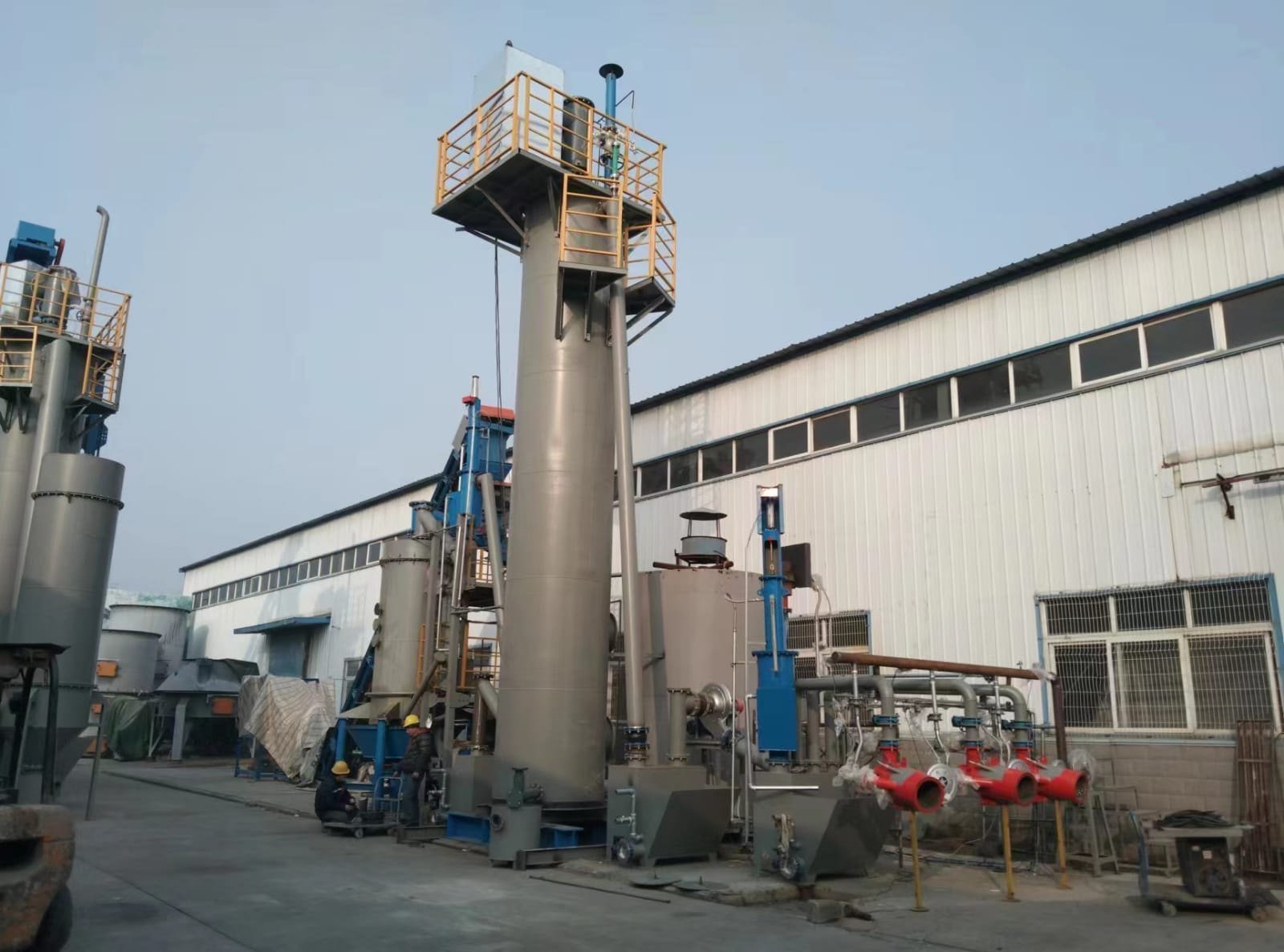
Transform Your City’s Waste Management with Advanced Gasification
Our 200 tons-per-day (TPD) RDF gasification plants represent the most advanced solution for municipalities facing landfill crises. Unlike traditional disposal methods, our facilities convert municipal solid waste into electricity, pyro-oil, biochar, hydrogen, and recoverable metals—while reducing landfill volume by up to 94%.
Backed by KANKYO Group’s 25+ years of global expertise and proven across India, Sri Lanka, Malaysia, Egypt, and the Philippines, our gasification technology delivers measurable environmental, economic, and social benefits.
Key Features & Benefits
🔥 Advanced Thermal Processing
- Controlled gasification at 800-5,000°C
- Sub-stoichiometric conditions prevent harmful emissions
- Optional plasma enhancement for ultra-clean syngas
- Handles variable Indian MSW compositions (40-60% organics)
📉 Dramatic Volume Reduction
- 85-94% reduction in landfill volume
- 200 TPD plant saves 300+ acres over 20 years
- Frees valuable urban land for productive use
- Only 6-15% inert residue remains
⚡ Multi-Stream Revenue Generation
- Electricity: 20-25 GWh annually (power for 10,000+ homes)
- Pyro-Oil: 18-25 TPD industrial fuel alternative
- Biochar: 6-10 TPD for agriculture/activated carbon
- Hydrogen: 1 TPD green H₂ via electrolysis
- Metals: 3-5 TPD ferrous + non-ferrous recovery
- Slag: Construction-grade aggregate
🌱 Environmental Excellence
- Near-zero emissions (CPCB & NGT compliant)
- Particulates: <5 mg/Nm³ (standard: <50 mg/Nm³)
- Dioxins/Furans: <0.1 ng TEQ/Nm³
- Continuous emission monitoring with public transparency
- Zero leachate generation (no groundwater contamination)
💼 Economic Viability
- Total annual revenue: ₹60-90 Crore
- EBITDA: ₹20-35 Crore/year
- Payback period: 10-15 years
- Equity IRR: 14-20% (with moderate leverage)
- Carbon credit opportunities: ₹3-6 Crore/year
👥 Social Impact
- 65-98 direct permanent jobs per plant
- 200-305 indirect employment opportunities
- Integration programs for rag pickers and informal workers
- Skills training and formal employment with benefits
- Improved community health (vector elimination, air quality)
Technical Specifications
Plant Capacity & Infrastructure
| Parameter | Specification |
|---|---|
| Processing Capacity | 200 TPD (73,000 tons/year) |
| Land Requirement | 10 acres total (3 acres plant, 7 acres support) |
| Power Output | 4-5 MW net electrical |
| Annual Generation | 20-25 GWh |
| Plant Availability | 85-90% (accounting for maintenance) |
| Operators Required | 10-15 per shift (30-45 total across 3 shifts) |
| Operational Life | 20-25 years with proper maintenance |
Pre-Processing System
Trommel Screens:
- 4 parallel units, 25 TPH capacity each
- Variable perforation (40mm, 60mm, 80mm zones)
- Separates inerts from combustibles
Magnetic Separation:
- Electromagnetic separators for ferrous metals
- 92-95% recovery efficiency
- 3-5 TPD metal extraction
Manual Sorting Stations:
- 15-20 workers per shift
- Non-ferrous metals, recyclable plastics, glass, textiles
- PPE-equipped, ventilated work environment
Industrial Shredders:
- Twin-shaft design with carbide teeth
- 50-100mm particle output
- 12 TPH capacity per unit (2 active + 1 standby)
Heated Drying System:
- Waste heat recovery from gasification
- Reduces moisture from 40-60% to 20-25%
- 30-40 tons water removed daily
Gasification Reactor
Design: Downdraft fixed-bed gasifier (KANKYO proprietary)
Temperature Zones:
- Drying: 100-200°C
- Pyrolysis: 200-700°C
- Gasification: 700-1,200°C
- Plasma Enhancement (optional): 3,000-5,000°C
Residence Time: 2-4 hours
Syngas Composition:
- Carbon Monoxide (CO): 18-24%
- Hydrogen (H₂): 12-18%
- Methane (CH₄): 2-4%
- Carbon Dioxide (CO₂): 10-15%
- Nitrogen (N₂): 45-50%
- Energy Content: 4.5-6.5 MJ/Nm³
Emission Control System
Multi-Stage Scrubbing:
- Cyclone separators (particulate removal)
- Wet scrubbers (acid gas absorption)
- Electrostatic precipitators (99.5% fine particle capture)
- Activated carbon filters (trace organic removal)
Continuous Monitoring:
- Real-time sensors for CO, NOx, SOx, PM, temperature
- Data logging for regulatory compliance
- Automated process adjustments
- Remote diagnostics and alerts
Guaranteed Performance:
- Meets/exceeds CPCB and NGT standards
- Third-party verification
- 99.9% uptime on monitoring systems
Process Flow
Step-by-Step Transformation
1. Waste Reception (Hour 0)
- Municipal trucks deliver segregated MSW
- Hydraulic tipping floors
- Automated weighbridge recording
- Initial hazardous material screening
2. Primary Segregation (Hours 1-2)
- Trommel screening separates by size
- Inerts (<80mm) bypass gasification
- Combustibles (>80mm) continue processing
3. Metal Recovery (Hours 2-3)
- Electromagnetic extraction of ferrous metals
- Manual sorting for non-ferrous metals
- Quality control inspection
4. Shredding (Hours 5-7)
- Particle size reduction to 50-100mm
- Uniform distribution for even heating
- Dust suppression systems
5. Drying (Hours 7-12)
- Heated conveyor moisture removal
- Target: 20-25% moisture content
- Waste heat utilization (energy neutral)
6. Gasification (Hours 12-18)
- Thermal decomposition in reactor
- Sub-stoichiometric oxygen conditions
- Syngas generation
- Slag collection
7. Gas Cleaning (Hours 18-22)
- Multi-stage scrubbing
- Emission control
- Syngas conditioning
8. Energy Conversion (Hours 22-24)
- Electricity generation via gas turbines
- Pyro-oil condensation
- Biochar recovery
- Grid connection
Financial Model
Capital Investment (CAPEX)
| Component | Cost (₹ Crore) |
|---|---|
| Pre-Processing Equipment | 40-50 |
| Gasification Reactor | 80-100 |
| Emission Control Systems | 50-60 |
| Power Generation Equipment | 40-50 |
| Civil Works & Buildings | 30-40 |
| Utilities & Infrastructure | 25-30 |
| Contingency & Commissioning | 35-50 |
| Total CAPEX | 320-380 |
Operating Expenses (OPEX – Annual)
| Category | Cost (₹ Crore/Year) |
|---|---|
| Personnel (65-98 staff) | 12-15 |
| Consumables & Reagents | 10-12 |
| Maintenance & Repairs | 8-10 |
| Utilities (power, water) | 8-10 |
| Insurance & Administration | 5-6 |
| Compliance & Monitoring | 4-5 |
| Ash/Slag Handling | 2-3 |
| Total OPEX | 55-60 |
Revenue Streams (Annual)
| Source | Revenue (₹ Crore/Year) |
|---|---|
| Tipping Fees | 18-30 |
| Electricity Sales | 20-28 |
| Pyro-Oil Sales | 12-18 |
| Biochar Sales | 5-8 |
| Metals Recovery | 2-4 |
| Slag Sales | 1-2 |
| Carbon Credits | 3-6 |
| Total Revenue | 60-90 |
Returns Analysis
- Annual EBITDA: ₹20-35 Crore
- ROI: 6-10% (EBITDA/CAPEX)
- Simple Payback: 10-15 years
- Equity IRR (levered): 14-20%
- Project IRR (unlevered): 10-14%
Note: Assumes 80% plant load factor (PLF) post-stabilization, moderate tipping fees, and firm power purchase agreements
Ideal Applications
✅ Municipal Solid Waste Management
- Cities generating 200+ TPD waste
- Landfill space constraints
- NGT compliance mandates
- Smart city initiatives
✅ Metropolitan Authorities
- Delhi NCR (Ghaziabad, Okhla, Bhalswa, Ghazipur)
- Mumbai Metropolitan Region
- Bangalore Urban Development
- Hyderabad Municipal Corporation
- Chennai Corporation
- Pune, Ahmedabad, Kolkata, and other Tier-1 cities
✅ Special Economic Zones
- Industrial townships with captive waste
- Manufacturing clusters
- IT parks and commercial complexes
- On-site power generation needs
✅ Legacy Landfill Remediation
- Overflowing dump sites
- Environmental liability cleanup
- Land reclamation projects
- Court-ordered compliance
Implementation Timeline
Phase 1: Planning & Approvals (6-9 months)
- Site selection and feasibility study
- Waste characterization analysis
- Environmental Impact Assessment (EIA)
- Public hearing and stakeholder consultation
- CPCB/SPCB clearances
- Financial closure and contracts
Phase 2: Engineering & Procurement (6-9 months)
- Detailed engineering design
- Equipment procurement from KANKYO
- Civil contractor selection
- Environmental permits finalization
- Grid connection agreements
Phase 3: Construction (12-18 months)
- Site preparation and foundation
- Civil works (buildings, structures)
- Equipment installation
- Electrical and instrumentation
- Utility connections
- Pre-commissioning checks
Phase 4: Commissioning & Operations (3-6 months)
- System testing and integration
- Performance validation runs
- Operator training (25-30 personnel)
- Trial operations with waste
- Regulatory inspections and certification
- Commercial operations handover
Total Project Duration: 27-42 months from approval to full operations
Success Stories
Sri Lanka – Colombo Facility (2018)
Capacity: 150 TPD
Results:
- 92% volume reduction achieved
- 18 GWh annual electricity generation
- Zero environmental violations in 6+ years
- Community acceptance after initial resistance
- 9-year payback period achieved
Malaysia – Industrial Park (2020)
Capacity: 100 TPD
Results:
- Mixed industrial waste processing
- Syngas-to-methanol conversion (35 TPD)
- Process steam supply to nearby industries
- 88% volume reduction
- ROI achieved in 9 years
Rajasthan – Urban Pilot (2022)
Capacity: 50 TPD
Results:
- India’s first KANKYO-Vaigunth project
- Legacy landfill waste processing
- 87% reduction on 10+ year old waste
- CPCB compliance certification
- 25 Indian operators trained
- Blueprint for nationwide scaling
Why Choose Zerosigma Shakti?
🏆 Proven Technology
- KANKYO Group: 25+ years, 5 continents
- Dozens of operating facilities worldwide
- Field-tested reliability, not experimental systems
🇮🇳 Local Expertise
- Vaigunth Ener Tek: Indian implementation partner
- CPCB/NGT regulatory navigation
- Understanding of Indian MSW characteristics
- Cultural competency in community engagement
🔬 Technical Excellence
- Zerosigma Inc.: 37 years in regulated industries
- FDA compliance, quality assurance expertise
- Engineering precision, documentation standards
- Long-term operational commitment
🤝 Comprehensive Support
- End-to-end project development
- Financing arrangement assistance
- Operator training and technology transfer
- After-sales maintenance and support
- Performance monitoring and optimization
🌍 Sustainability Focus
- Environmental responsibility (near-zero emissions)
- Social equity (rag picker integration)
- Economic viability (diversified revenues)
- Community health benefits
Environmental Compliance
Regulatory Standards Met
Central Pollution Control Board (CPCB):
- MSW Management Rules 2016
- Emission standards for WtE facilities
- Continuous monitoring requirements
National Green Tribunal (NGT):
- Court directives on landfill management
- Emission compliance mandates
- Public health protection orders
Ministry of Environment, Forest and Climate Change (MoEFCC):
- Environmental clearance procedures
- EIA notification requirements
- Public consultation protocols
Certifications & Audits
✓ ISO 14001: Environmental Management Systems
✓ ISO 45001: Occupational Health & Safety
✓ Third-party emission verification
✓ Annual environmental audits
✓ Continuous Emission Monitoring Systems (CEMS)
✓ Public data transparency